The Verdict: If You Build It, They Will Ping
Moving the tournament to Beloit, Wisconsin, was a massive gamble. The 2024 Regional Championships in Ohio attracted a respectable 130 players, and we worried that traveling further into Wisconsin—which isn’t even technically in the USATT Midwest Region—would be a bridge too far.
As it turned out, our geographic exile worked like a charm. It acted as a magnet for players further west in Minnesota and Missouri who finally had a tournament within a comfortable driving distance. We filled a staggering 92% of all available spots and reeled in 219 players, completely shattering our Ohio numbers.
Our success relied on a three-pronged marketing assault:
- Omnipong: We listed the event on this venerable, time-tested platform officially adopted by USATT, which immediately caught the eyes of dedicated out-of-state players.
- Vlad Farcas: Vlad blasted his network of junior players, reminding them this was their absolute last chance to secure vital national ranking points before the US Nationals, which can only be earned at one of the 8 official Regional Championships.
- My Inescapable Email Avalanche: I launched a relentless email campaign. AWS Simple Email Service actually denied my application because their AI based system flagged me as a spam menace about to destroy their spotless reputation. Undeterred, I manually blasted emails out in batches of 400—initially twice a month, escalating to once a week during the final five-week countdown.
The strategy worked. Illinois sent a small army of 108 players, and Wisconsin defended its home turf with 30. The rest came from practically every corner of the map:
- The Neighbors: Minnesota (16), Missouri (12), Michigan (6), Ohio (5), Iowa (2), North Dakota (2), and Kansas (1).
- The Long-Distance Travelers: California (15), Texas (6), New Jersey (4), North Carolina (3), Colorado (3), New York (2), Georgia (1), and Arkansas (1).
- The Ultimate Frequent Flyer: Literally one player from France.
Out of 219 registered competitors, we had only 7 no-shows. A few others fought so hard on Saturday that their bodies went on strike, forcing them to withdraw on Sunday. All in all, the turnout was legendary.
The June 1st Prize Money Blitz
When it became clear the tournament was going to be a hit, we still had about 15% of our player slots sitting empty. I had two major motives to fill them. First, as an official 4-Star USATT sanctioned tournament, it should offer a minimum of $6,000 in total prize money, and our baseline pool was sitting just short at $5,400. Second, I genuinely wanted to reward the players who took a leap of faith to support us at this new, completely unproven venue in Beloit.
To push us over the financial threshold and take care of our players, I gamified the remaining entries by launching the Prize Money Challenge in my weekly email blast.
The rules were simple: for anyone who signed up after June 1st, 100% of their event entry fees would be funneled directly back into the player purse.
The community loves cash, and 30 additional players signed up before the registration deadline of Jun 8th. Thanks to this late surge, we successfully pushed past our 4-Star requirement, pumping the total prize money pool from $5,400 to a grand total of $6,400. The final amounts were posted here.
The Podium Paradox and the Late-Arrival Frame
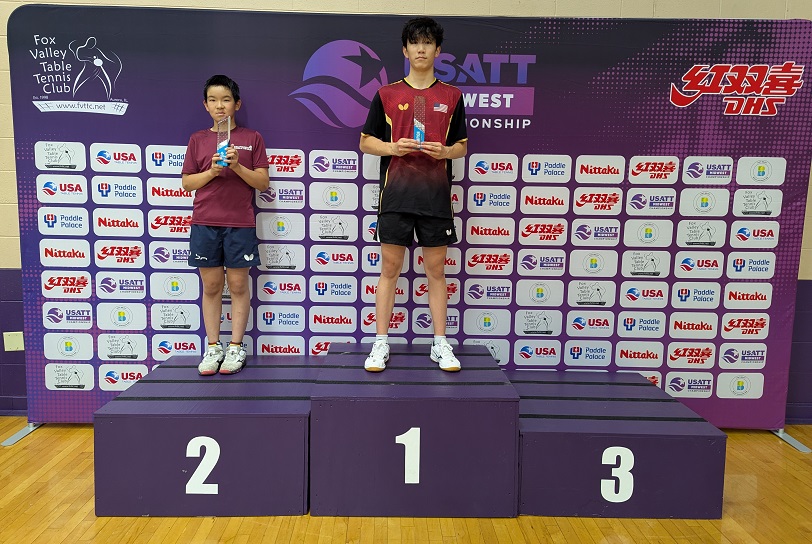
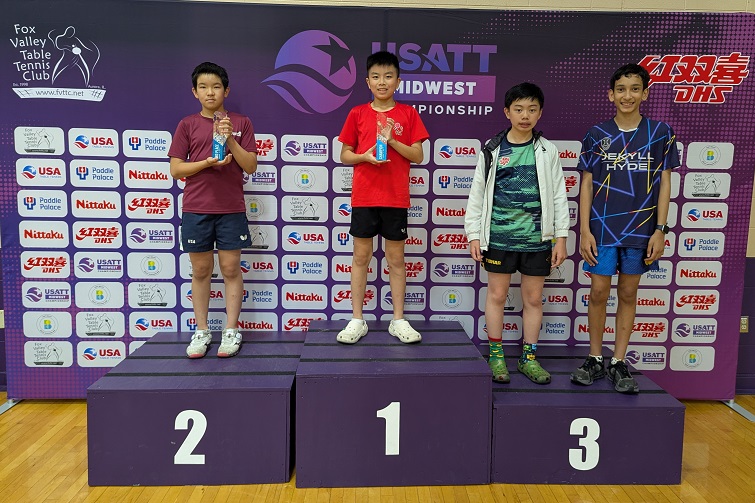
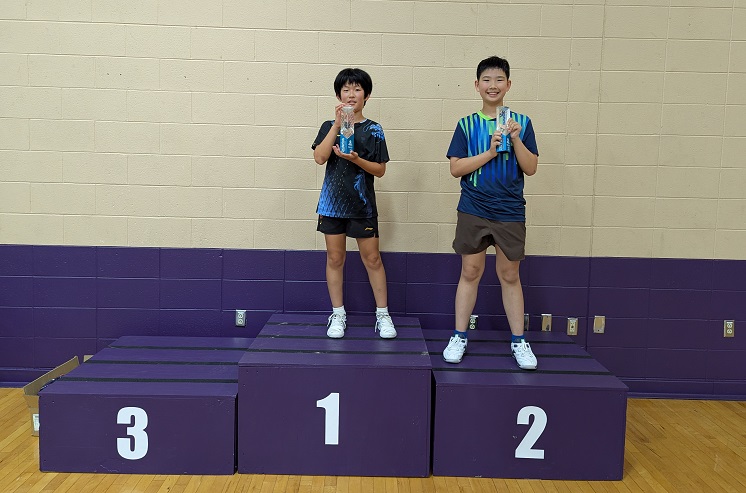
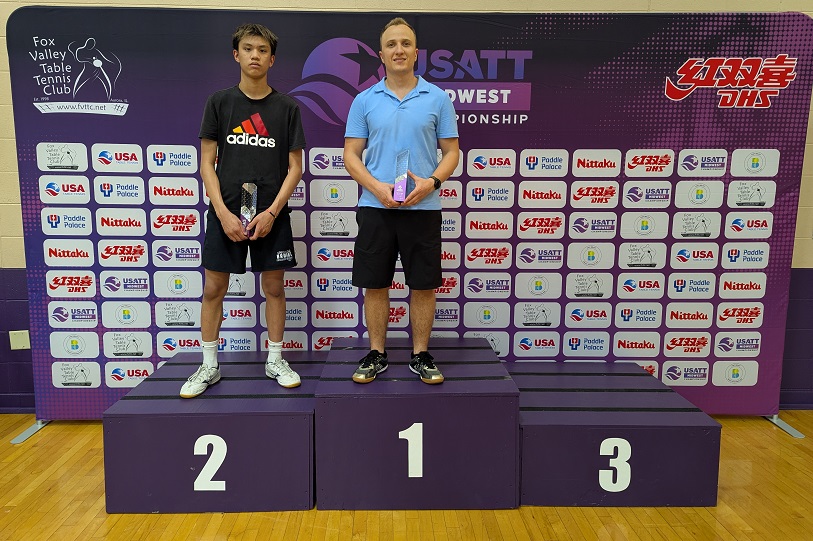
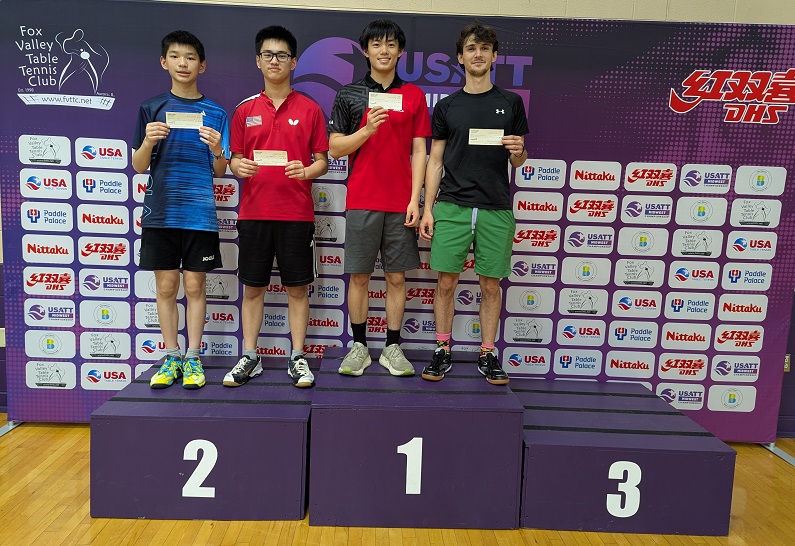
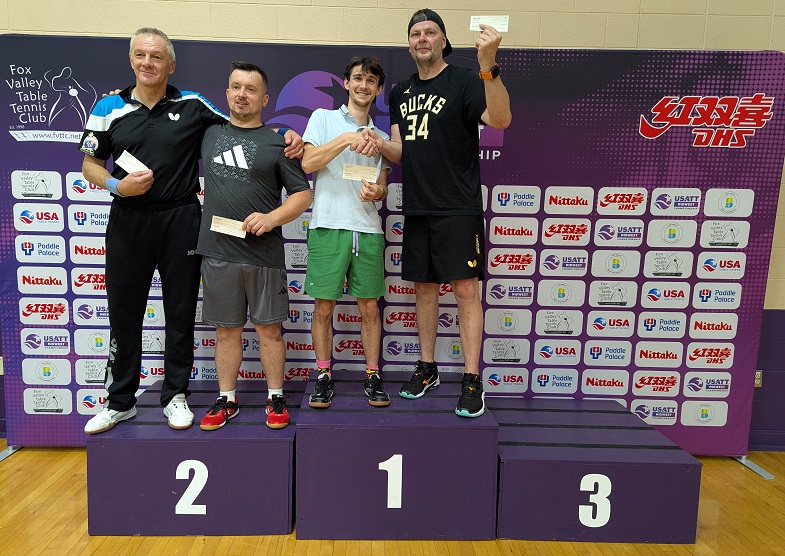
We were lucky that the high school had a podium we could borrow from their pool competitions, but it came with eight massive cubes instead of the typical three. I hijacked the three smallest cubes, but they were stamped with the wrong placement numbers. My high-tech solution? Meticulously tracing and cutting out numbers 1, 2, and 3 on self-adhesive paper and attaching them to the back of the cubes.
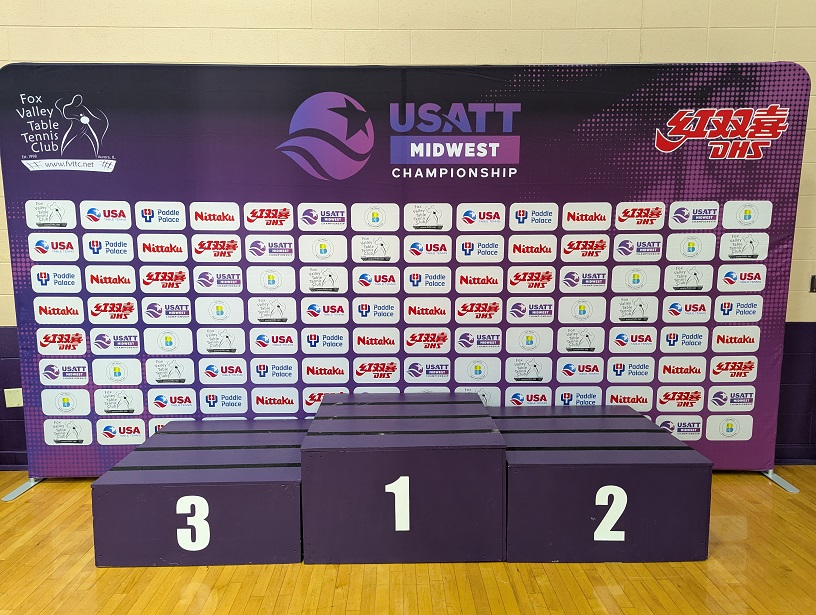
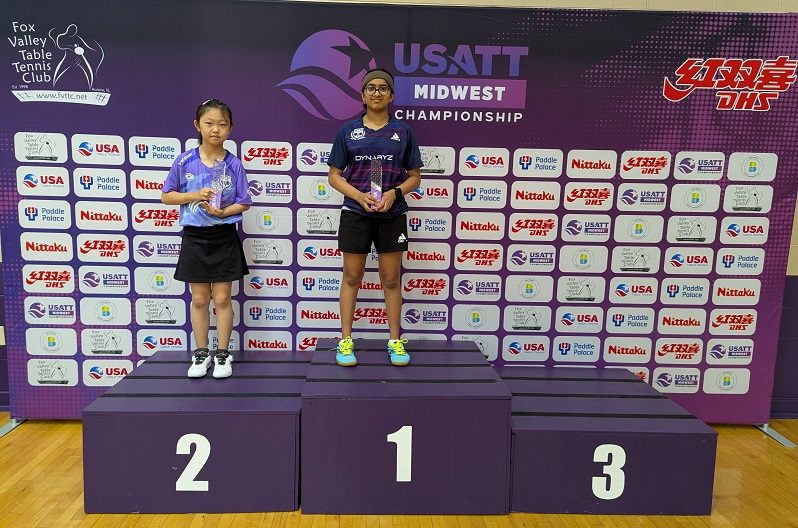
With the makeshift podium sorted, we hit our next hurdle: the gorgeous background banner Vlad had ordered from China. There was just one tiny detail missing—Vlad had forgotten to order the actual metal frame to stretch it on.
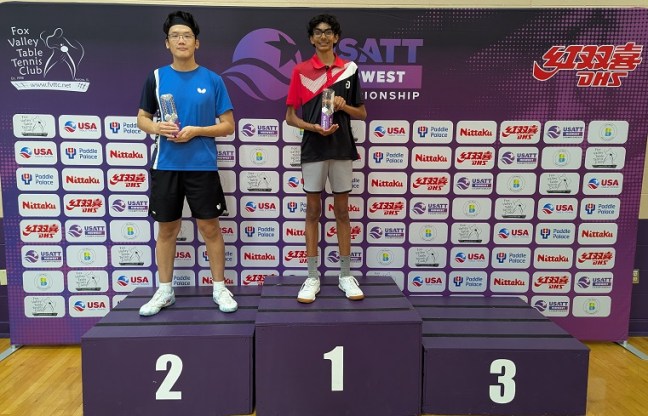
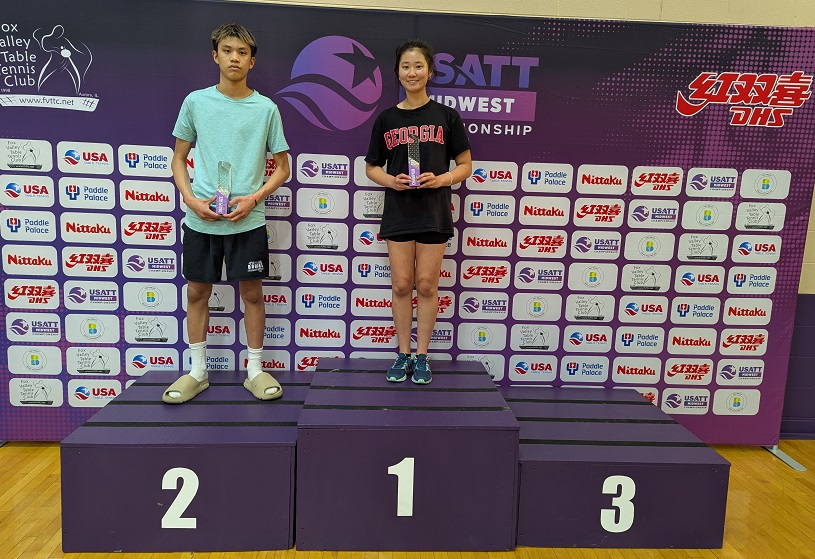
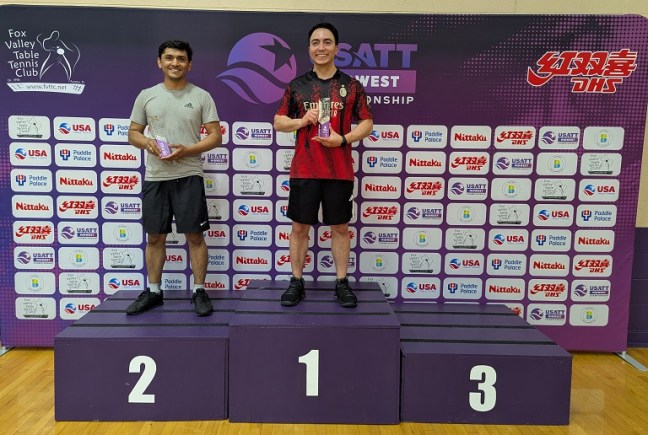
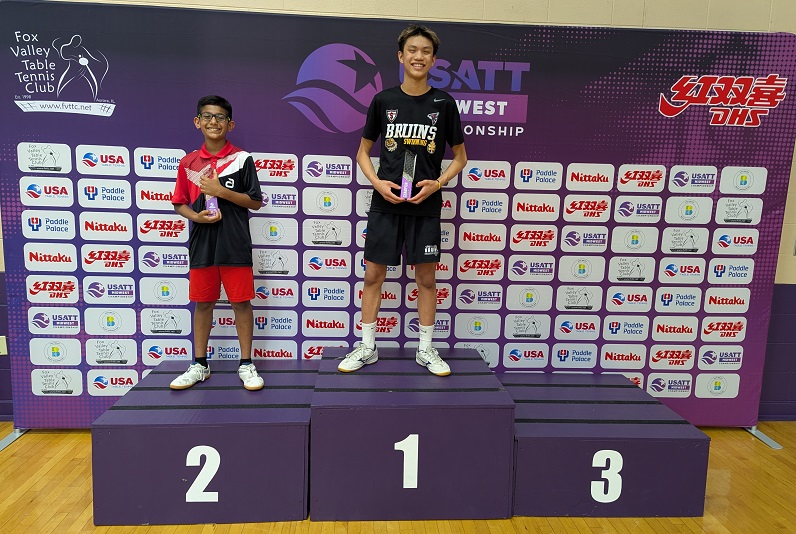
He realized the mistake and rushed an order, but shipping was delayed. It was scheduled to arrive at my house in Aurora on Friday, but it didn’t land until Saturday morning. In an act of pure dedication, Vlad drove all the way back to Aurora on Saturday morning, grabbed the frame, and sped back to Beloit just before 3:00 PM. Thanks to his highway heroics, all but the first two concluded events got a properly classy trophy ceremony. The final setup looked incredibly professional—easily the best presentation of any tournament I’ve ever run.
Trophies Worth Fighting For
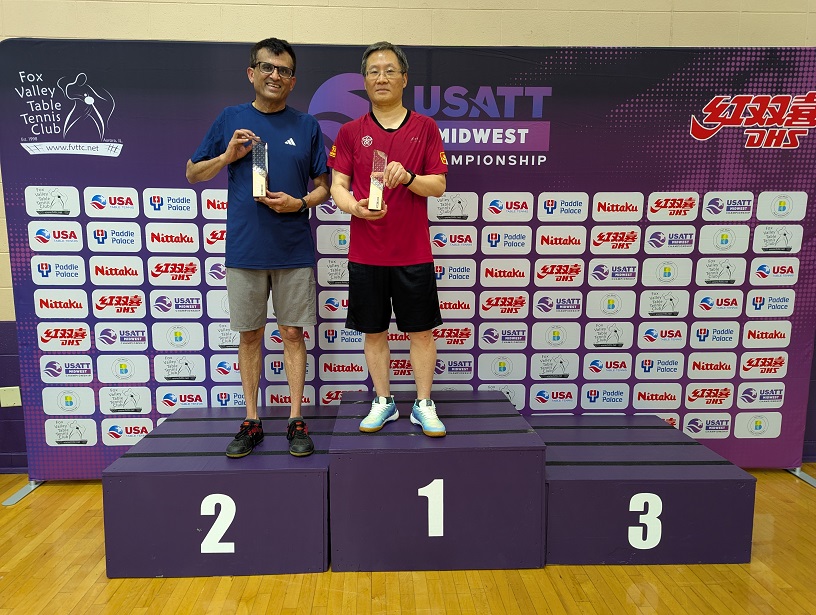
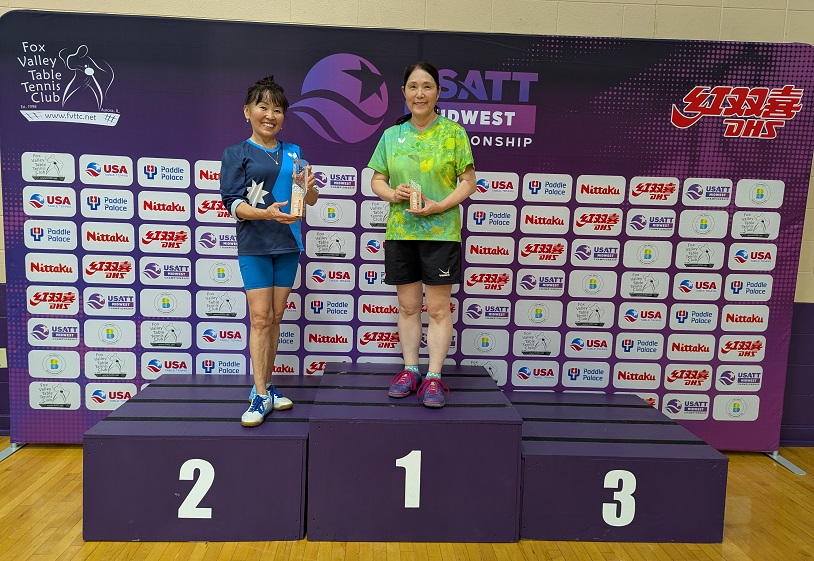
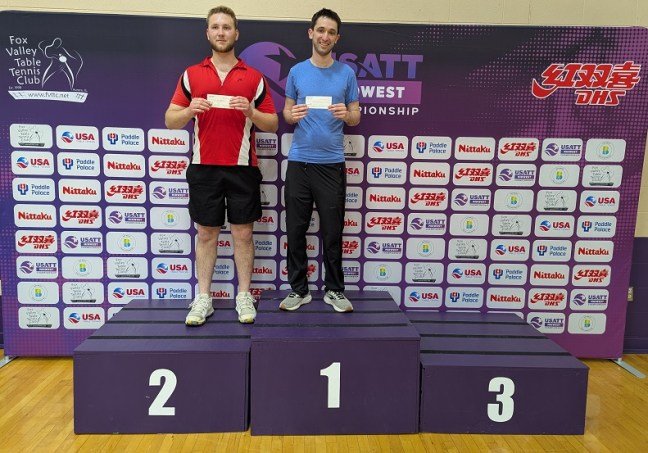
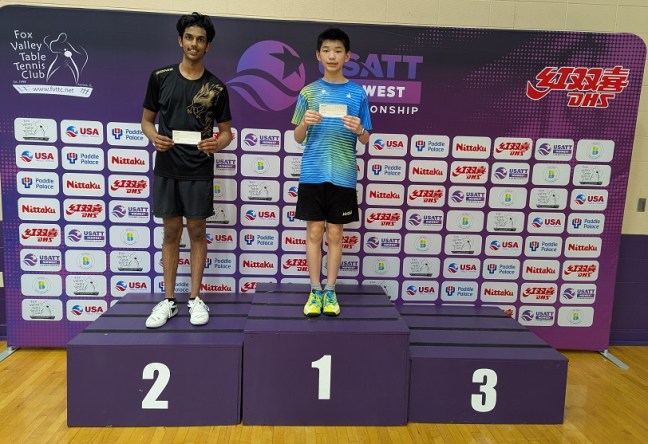
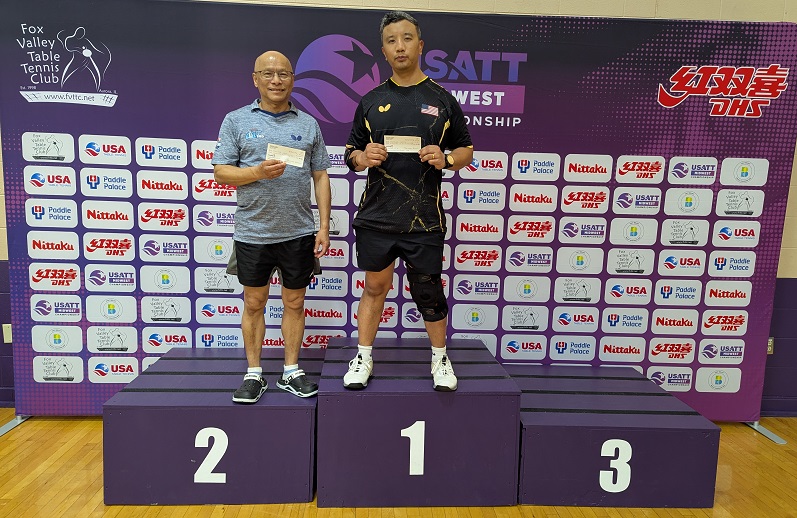
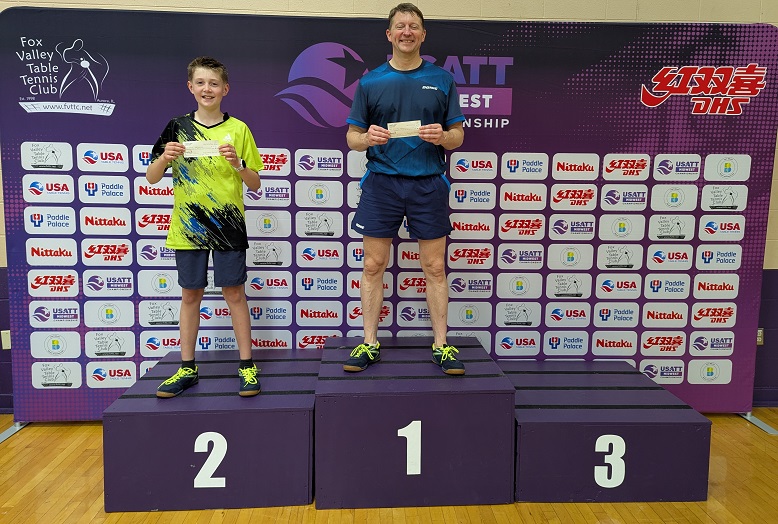
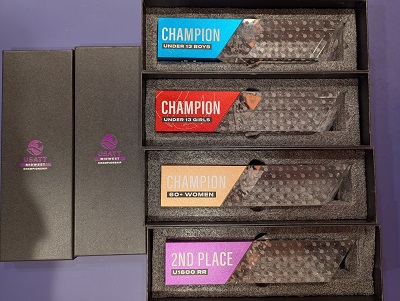
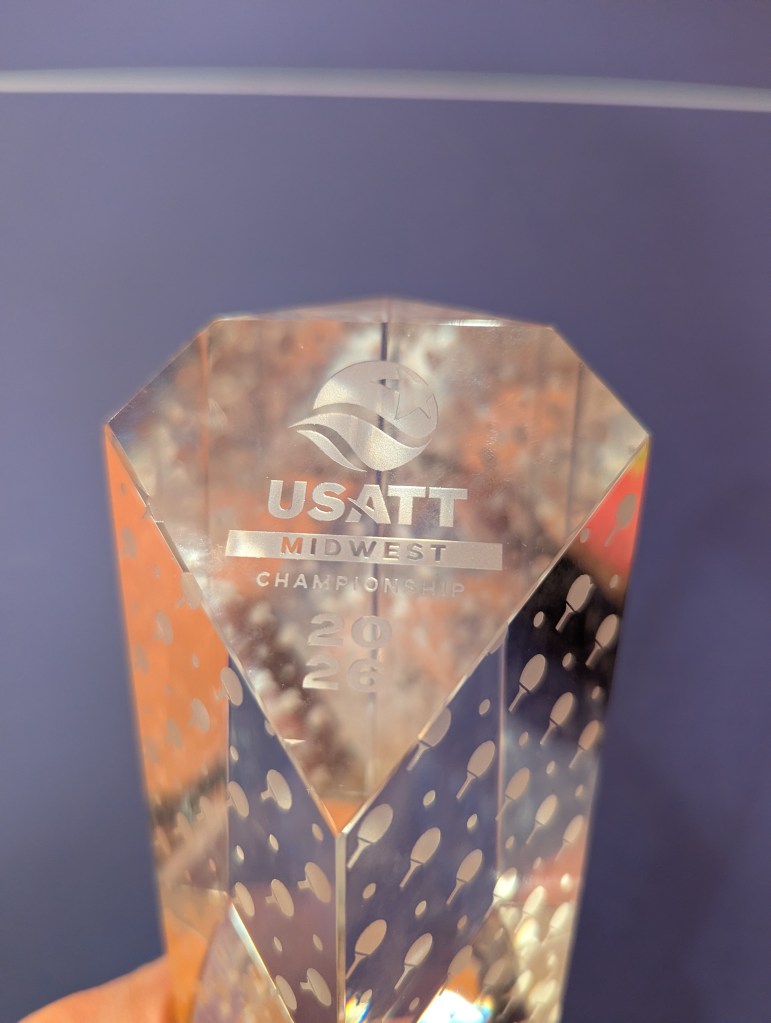
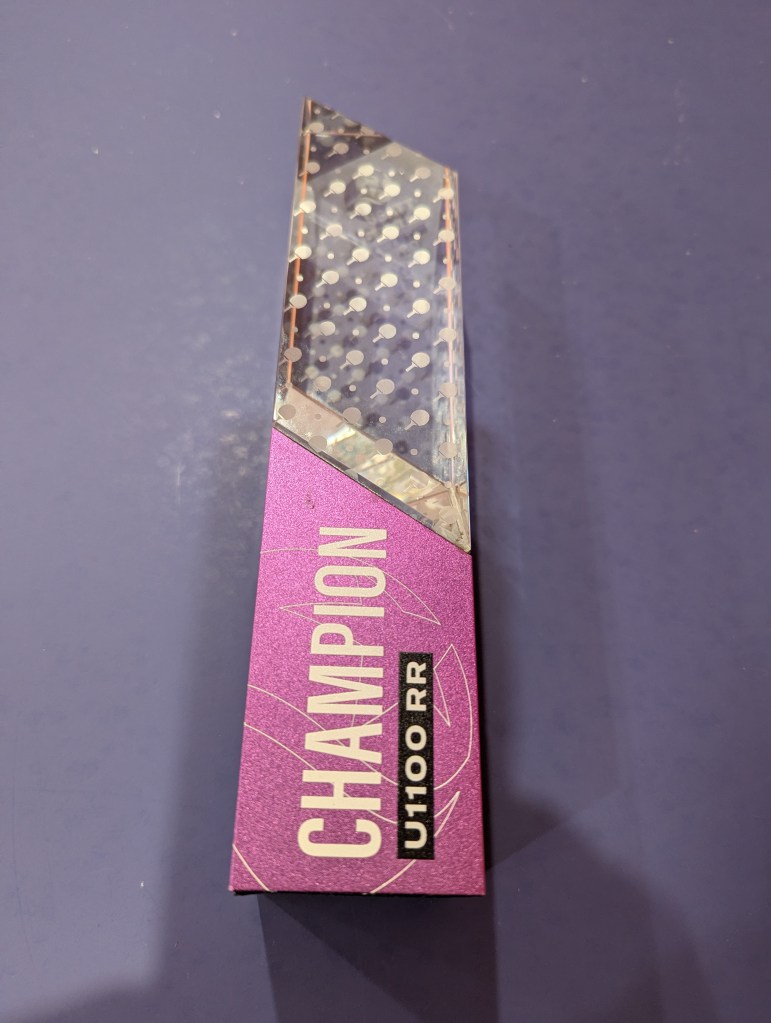
Speaking of the award ceremonies, I received a number of compliments stating these were the absolute best trophies I had ever offered. They came in 4 colors and were packaged in elegant black boxes with tournament logo.
Getting them was an exercise in high anxiety. It took a few iterations to arrive at the final design and get the design files in the format acceptable by the vendor, secure a physical sample from a brand-new factory in China, and then greenlight the production of all 38 trophies. My constant dread with any new international vendor is whether the shipment will arrive late or shattered into pieces. Fortunately, this vendor passed with flying colors on both counts—everything arrived on time and undamaged.
The aesthetic payoff was massive. In fact, a few players confessed to me that they only decided to sign up for the tournament after I started including photos of the custom trophies in my weekly email blasts. Visual marketing at its finest.
With New Venues Come New Terrors
Every tournament director knows the thrill of a new venue. It brings fresh energy, new possibilities, and a buffet of existential dread. Going into this, my mind was racing with questions:
- Will the equipment arrive before the tournament ends?
- Will I have to set up 24 table tennis tables entirely by myself?
- Will the venue’s Wi-Fi be fast enough to support modern smartphones, or will it reduce our players with older phones to tears?
- Will the weather cooperate or will be too hot to play?
- Will enough players sign up to cover the expenses?
Spoiler alert: We survived. But the journey involved battling corporate bureaucracy, defying the laws of physics, and dodging a localized apocalypse. Here is how it actually went down.
The Great Penske Paperwork Protocol
Ed Hogshead stores his table tennis equipment at a storage facility on the rural fringes of Rockford, Illinois—about 20 miles south of our venue in Beloit, Wisconsin. My logistical master plan was simple: leave Aurora around 6:30 am, rent a massive truck from Penske in Machesny Park, play truck driver for a day, and make a few quick rounds, then head back home.
However, Beloit Memorial High School lacks a loading dock or a hydraulic lift. Naturally, I requested a truck with a liftgate to save my spine from imminent destruction. Penske’s system promptly informed me that liftgates are strictly reserved for Real Businesses™.
Not to be deterred, I confidently filled out their commercial business application. Apparently, running a major regional table tennis tournament makes me a “small-time operation,” because my application was unceremoniously denied and my reservation deleted.
I didn’t even realize I had been ghosted until two weeks before the tournament when I called to adjust the dates. A lovely representative reinstated it, only for the Penske automated rejection overlords to cancel it again a few days later. This triggered a 30-minute therapy session with the Penske finance department where I literally recited my entire history of the table tennis tournament organization and coaching. The verdict? They finally agreed to rent me a truck, but absolutely no liftgate for you.
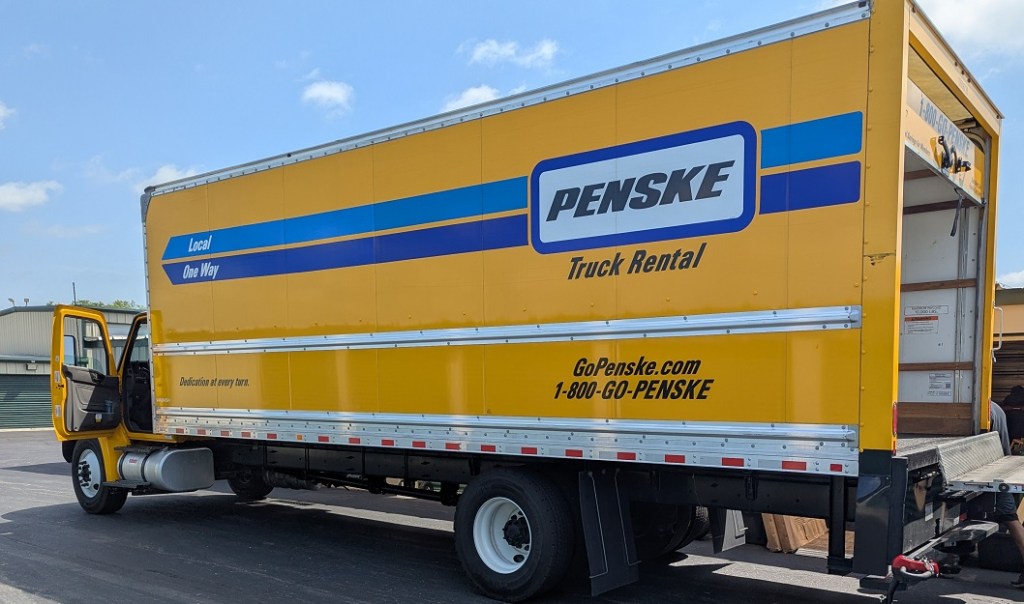
Ed Hogshead and the Physics-Defying Truck Bridge
I arrived at the storage facility just after 9:00 AM on a day that felt approximately as hot as the surface of the sun. Ed greeted me with the ultimate motivational speech: “This truck isn’t going to work. It doesn’t have a liftgate.”
Driven by sheer adrenaline and denial, I told Ed I’d do whatever it took, even if we had to drag everything up the steep ramp by hand. Ed was recently fresh off a hip replacement surgery, so he was playing the role of Lead Architect while his hired helper, Antonio—a man possessing roughly twice my physical strength—and I provided the muscle.
Our mission was to transfer four massive 4x4x3 ft gray containers packed with heavy barrier parts from Ed’s truck into my truck. They weighed roughly a metric ton each. Lifting them was out of the question.
Fortunately, Ed holds a CDL and possesses a legendary supply of “trucker tricks.”
- Trick #1: Use the liftgate on his truck to form a floating bridge between the two vehicles, allowing us to roll the containers across with a pallet jack.
- Trick #2: Use the liftgate geometry to stack the containers on top of each other, saving space and sparing me from making multiple trips.
The bridge concept was flawless, until reality reminded us that our truck beds were completely different heights. Time for Trick #3. Ed calmly backed his truck onto a couple of wooden pallets to raise its rear end.
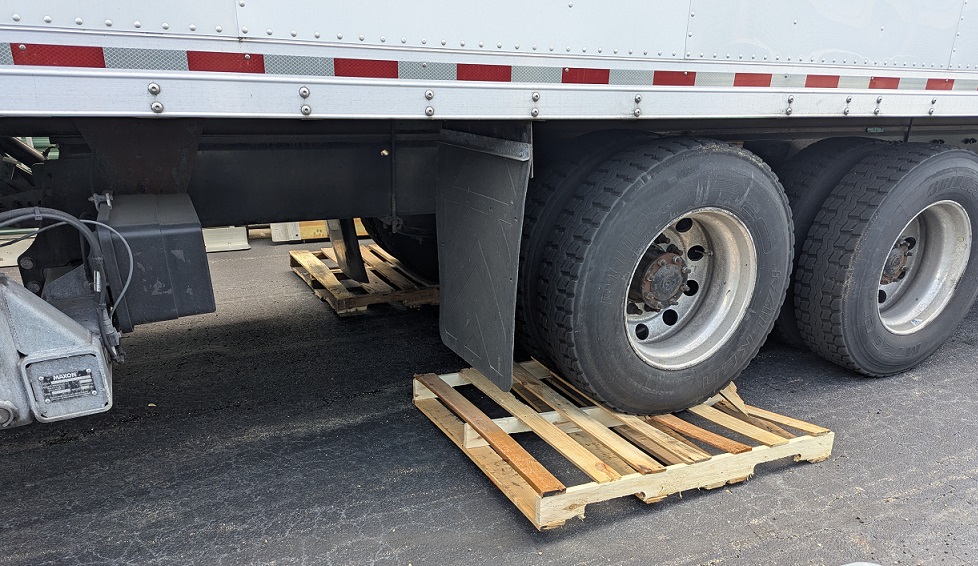
As you can see in the first photo, we were still not level. That’s when I remembered my truck was “fancy.” It featured a dashboard button that electronically adjusted the rear suspension height. After a tedious 10-minute ballet of reversing and micro-adjustments—which I won’t bore you with, though I did learn some excellent hand-signal choreography from Ed—the bridge was perfectly level. We rolled the containers right in.
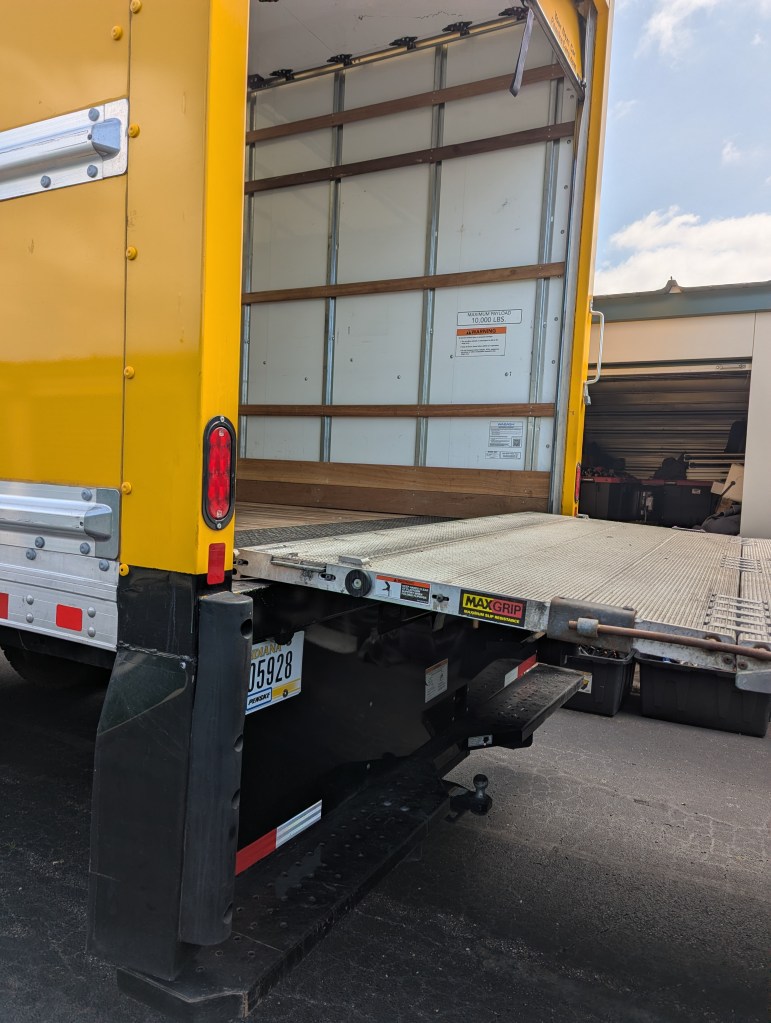
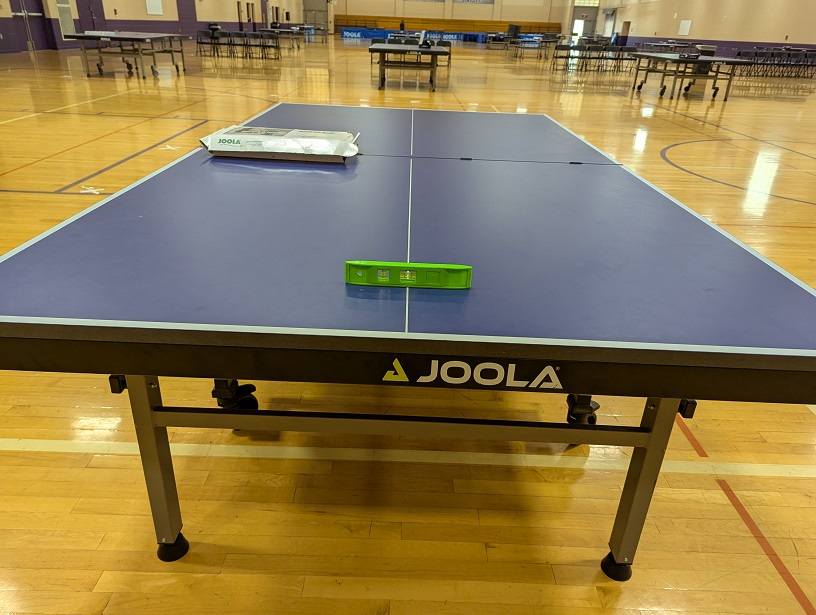
Next up was preparing the 24 tables for the journey. Ed, playing the role of strict foreman, made me manually screw in the adjustment feet on every single table to prevent them from unscrewing and getting lost in transit. This pedantic exercise severely slowed us down during loading, but it did give me an ominous realization: this would be the first tournament in history where I’d have to bring a spirit level just to get the playing surfaces flat.
Once that was done, we had to push those 24 of these 256 lb behemoths up a steep ramp in grueling 84-degree heat. It took Antonio and me another miserable hour, fueled entirely by frequent water breaks and sheer willpower. I walked away with a fantastic, glowing sunburn. Antonio walked away incredibly angry about his severely delayed lunch schedule, and honestly, I couldn’t blame him.
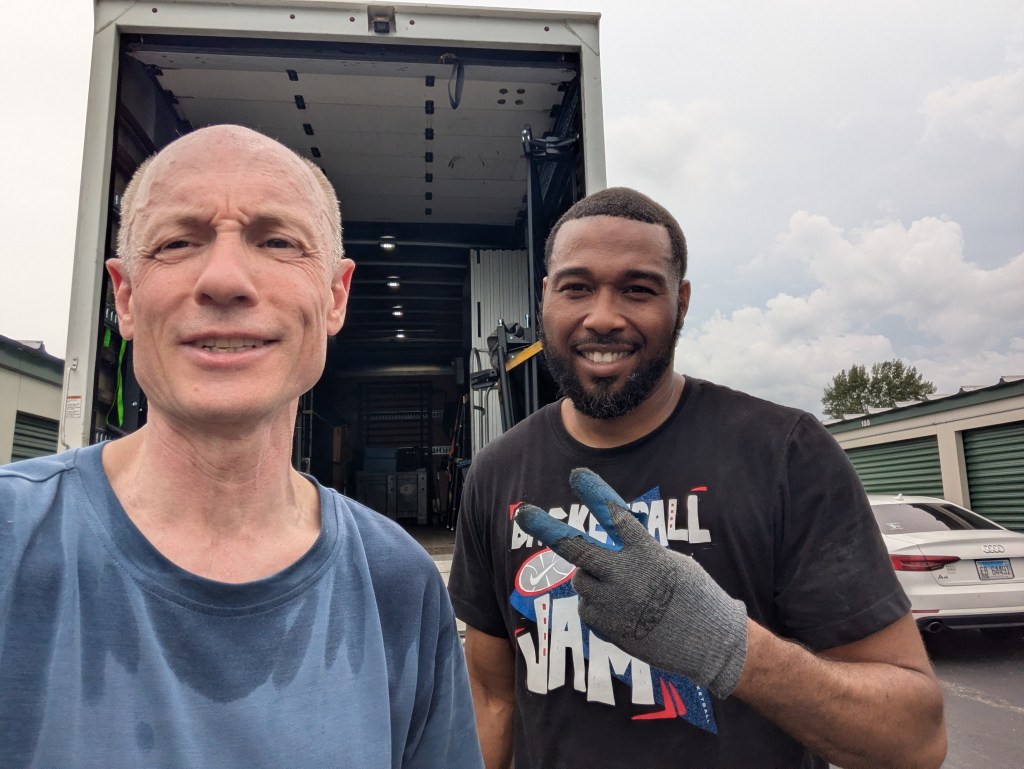
Fast, Furious, and Fractured Weather
By 1:30 PM, I inhaled two sandwiches and took the wheel. Driving a 26-foot box truck through rural Illinois is a peaceful, albeit slow, experience. I cautiously pushed the beast all the way up to 50 mph. I can safely report that it does not possess the acceleration of my Tesla Model 3. In fact, the real-time fuel gauge indicated that during acceleration, it was chugging diesel at a terrifying rate of 4 miles per gallon.
I was exactly one mile from the venue when my phone blasted a Severe Weather Alert: Shelter in Place Immediately.
I furiously backed the truck up to the high school receiving door just as the sky turned a shade of apocalyptic gray. We managed to unload a few tables before the heavens absolutely opened up. For the next hour, as the winds howled, I sat inside the school genuinely wondering if my rented Penske truck was still parked outside or if it had been airborne-delivered back to Rockford.
We maximized our storm shelter time by measuring and marking the courts boundaries with painters tape. Once the storm downgraded to a miserable, depressing drizzle, we went back out to finish the job. Because we didn’t have a liftgate, we had to unpack the heavy barrier parts from those massive gray containers in small batches while they were still inside the truck, eventually rendering the containers light enough to lift down.
It was a grueling process, but we were saved by an absolute cavalry of volunteers from Visit Beloit who showed up to help us brave the elements. Not pictured is Brian the high school administrator who let us inside and helped with unloading too.
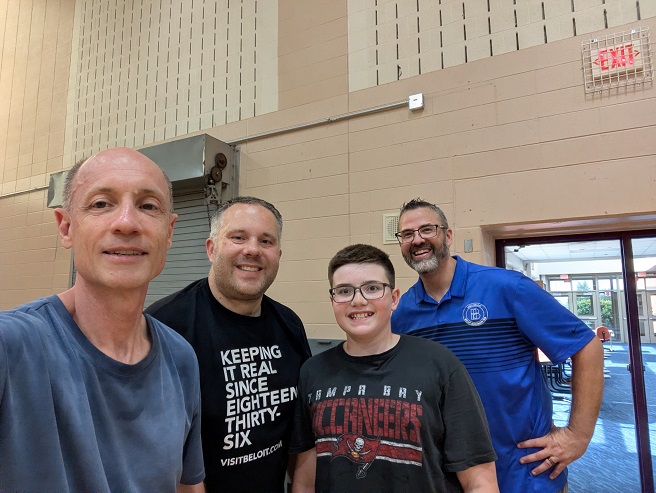
The day was still not over for me since I had to drive 1.5 hours back home to Aurora. After a quick charge session during dinner at Vallarta restaurant in the Rockford’s CherryVale Mall, I headed home in a rainy night.
Friday, June 12th: Venue Preparation Day
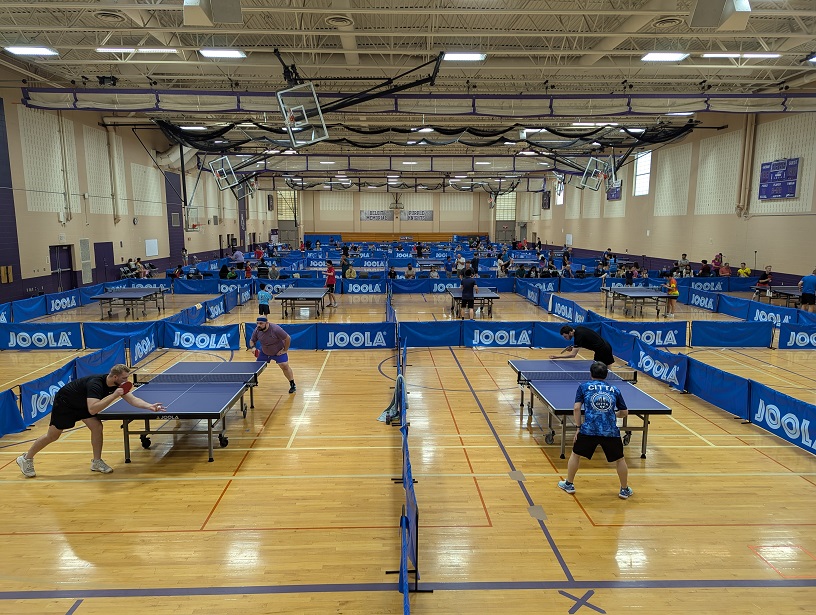
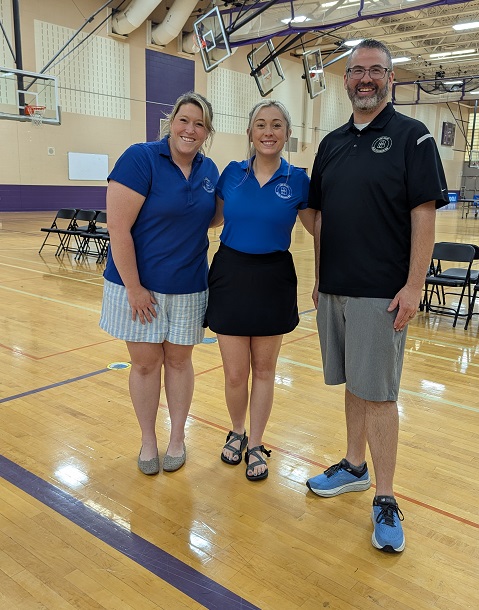
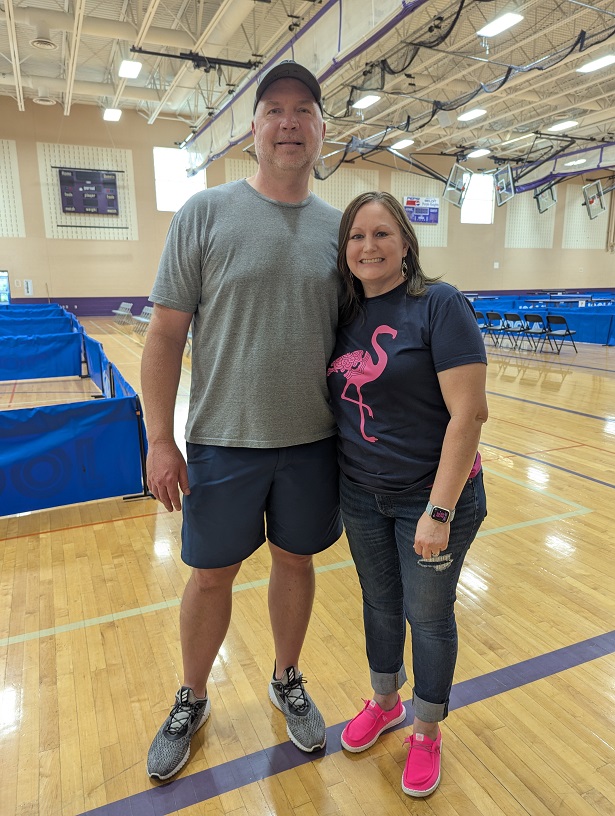
Friday was all about setup efficiency. I was joined again by a great crew: Matthew Bosen, Drew Pennington, Terri White, and Celestino Ruffing. Our first massive task was assembling 300 barriers to fully enclose each of our 19 by 38 feet courts. Thanks to a coordinated assembly line, we knocked it out in just under two hours.
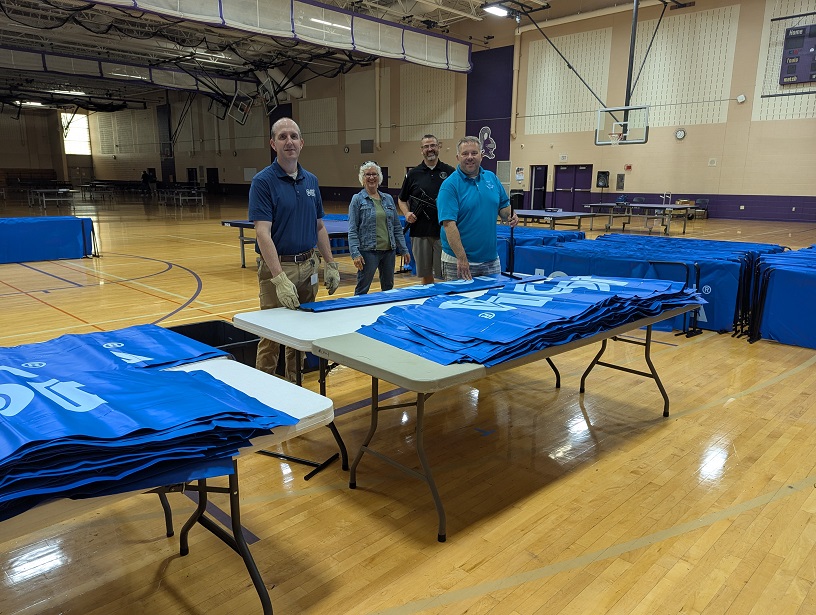
With the perimeter secure, we tackled the rest of the checklist:
- Laying out the remaining 14 courts: Getting the initial spacing perfect.
- The Heavy Lifting: Matthew B., Roy W., and Celestino moved the heavy tables into the exact center of each court.
- The Squeaky Clean Crew: Savannah Schindler, Taylor Stuehler, and I spent 45 grueling minutes washing the tables. It took so long because we had to aggressively rub down the surfaces to remove stubborn scuff marks. By the end of it, I was completely exhausted.
- The Net Crew: Savannah, Taylor, and Kristen Ward teamed up to install all 24 nets across the venue.
- The Leveling Boss: My ominous premonition came true. Armed with my spirit level, I spent an hour crawling around to level all 24 tables. Because of those adjustment feet, I had to repeatedly lift the heavy tables with my back just to screw them in. By the end of that hour, my back was seriously starting to hurt.
- Barriers, Chairs, and Black Holes: Roy and Kristen Ward positioned the barriers around the courts, while Savannah, Taylor, and others set up player and spectator chairs in the alleys. We also used blue plastic barrier sheets to cover the holes in the retractable bleachers, creating a defense mechanism to stop errant balls from vanishing into the bleacher abyss.
The Wi-Fi Whisperers
During the chaos, high school IT guys Matthew Sherman and Kevin Tippelt arrived to grant us access to the local public Wi-Fi. In classic tech fashion, it didn’t work the first time, or the second. But on the third attempt, we finally connected.
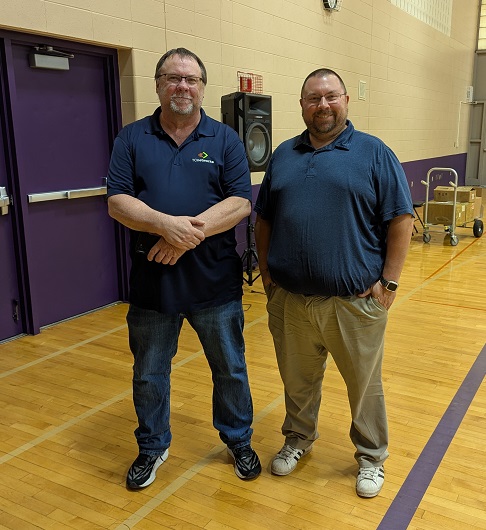
Thanks to everyone’s hard work, we wrapped up the entire venue preparation by 3:30 PM. The stage was set.
Saturday & Sunday: Battle of the Databases (and Paper)
I started to suspect Saturday wouldn’t be a smooth day when my inbox was suddenly hit by an avalanche of notifications from my TTAurora website about new account creations. Then I noticed something truly horrifying in the software: some tournament draws showed rating numbers without names.
It turned out the newly created accounts were accidentally “stealing” USATT membership IDs from the accounts I had meticulously pre-created for everyone who registered via Omnipong. Cue a mild panic attack. I hadn’t set up my laptops as development PCs, meaning I couldn’t just log into the database and manually tweak the rogue accounts.
Fortunately, I figured out a workaround: if I deleted the newly created accounts and re-imported the Omnipong entries, the system self-corrected. I had to repeat this digital exorcism for about 15 players on Saturday morning, and a few more on Sunday morning for the Sunday-only crowd. Huge thanks to Vlad, Alex, and Lijian Cai, who took over player check-ins through the TTAurora app so I could focus entirely on fixing the ghost accounts.
Welcome to 2026 (Unless You Hate Technology)
I was genuinely intrigued by how many players and parents were surprised to learn that the entire tournament would be run digitally through their phones—from check-in and viewing schedules to entering match scores. I thought that by the year 2026, a paperless tournament would be expected, but I was mistaken.
And speaking of paper, it actually came to my rescue later in the day. I discovered a major software oversight: I had made the single-elimination draw modification screen drag and drop feature too restrictive to change the draws in events with only two round robin groups. Fortunately, I had brought a stash of old-school paper match slips just in case. We recorded the matches that ought to be played on paper, and I entered them manually on Monday after the tournament. (Note to self: upgrade the software to allow full player removal before redrawing, rather than just replacing or adding them).
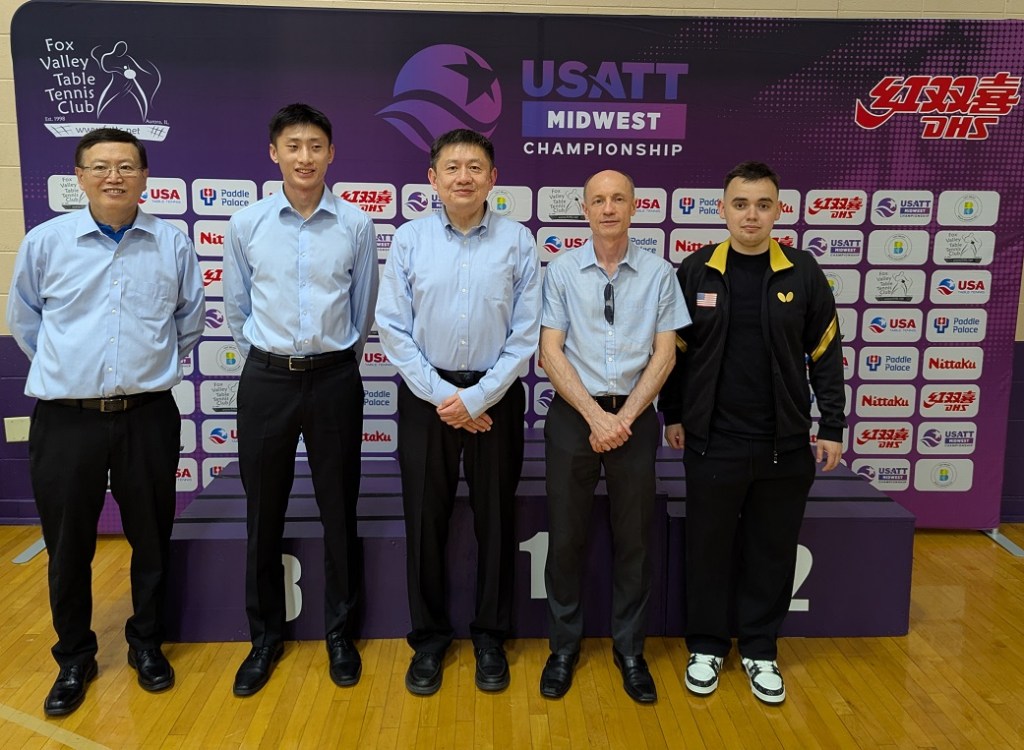
The Crew
The Servers Survive
Aside from those software hiccups, everything went remarkably smooth. My biggest existential dread—that my lone two servers would crash under the weight of 165 concurrent users on Saturday and 155 on Sunday—was completely unfounded. The website held up beautifully. A few players with older phones or slow data had to switch to the school’s public Wi-Fi, but the vast majority sailed through on their cellular networks.
Matches ended at 10:00 PM sharp exactly according to plan. This precise timing was entirely due to the masterful work of Lijian Cai, who took full responsibility as match scheduler and single-handedly resolved a mountain of player requests and scheduling conflicts. The tech threw some punches, but the team won the match.
A big thanks also goes to Alex Cai, who stepped up to enter a numerous match scores for players who either hit technical snags or simply didn’t want to bother learning the software.
Sunday: The Doubles Deluge and the Table Matrix Glitch
Sunday morning started with fixing a few more rogue ghost accounts, and then things sailed smoothly until the afternoon late-entry requests started rolling in. Doubles events are notoriously hard to fill in advance, but later in the weekend, players suddenly realize they want more action. Since doubles aren’t processed by USATT, it’s pure fun with a chance to win cash.
Naturally, I started squeezing these eager players into the brackets. The problem? I forgot to tell Lijian, who was meticulously managing the master schedule. After I added a player to the U1800 draw and hit “redo draw,” the system auto-reassigned the tables.
That is when all hell broke loose.
Lijian suddenly watched his screen warp into a chaotic glitch matrix. On my end, I was battling the software as it randomly rescheduled active afternoon matches to 8:00 AM. For the players checking their phones, table and time assignments changed in real-time, driving everyone nuts and leaving us with some highly upset competitors.
I personally marched over to one frustrated group to calm things down. After a few minutes of apologizing, I located a free table (#6) and sent them to play. However, we had already lost a critical hour, risking a bottleneck for the single-elimination rounds. To accelerate play, I hijacked a second nearby table (#3) and split the group across both. It worked beautifully—they went from zero tables to two, and the crisis was averted.
The Great Tear-Down and a Quiet Finale
Because the late Sunday events didn’t completely fill up, we got a head start on logistics around 5:00 PM. We collected the tables in one place with pads protecting the halves, packed the net sets into boxes, and stacked the barriers near the large door, ready for disassembly on Monday. Matthew and Kelly Bosen, along with Vlad, were instrumental in this blitz, leaving us with a short to-do list for Monday.
Thanks to Alex scouting out food, our core crew finally ate a late dinner around 9:30 PM.
The final match of the tournament was a long, grueling 5 games battle in the Under 13 Boys event. By that point, the high school gym was so quiet you could hear a pin drop. The match finally wrapped up at 10:30 PM.
For me, the day wasn’t over. My Tesla was rather low on charge, so while everyone else went to sleep, I headed out for a solitary late-night charging session at a Kwik Trip station, finally going to bed shortly after midnight. We did it.
Monday: The Shrinking Truck and the Two-Trip Marathon
Monday’s plan was supposed to be simple: pick up a truck at a Penske location in Roscoe, Illinois (a quick 10-minute drive from the hotel), roll up to the venue by 9:00 AM, and finish the final takedown.
But Penske had one last surprise for me. When I arrived, I noticed the truck looked a bit… stubby. It was only 22 feet long instead of 26, and a bit narrower. In truck logic, this meant only one thing: I was officially doomed to make two round trips between Beloit and Rockford. I resigned myself to my fate and hit the road.
Fortunately, the high school staff came through with a massive plot twist: they had a forklift. While they didn’t have a loading dock, that forklift drastically speeded up the process of loading our heavy containers. Each container held the parts for exactly 90 neatly disassembled barriers.
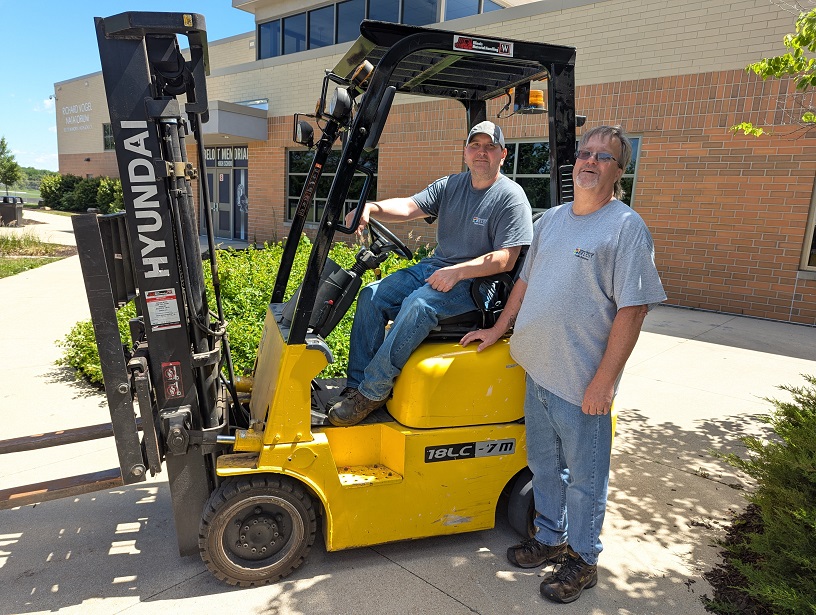
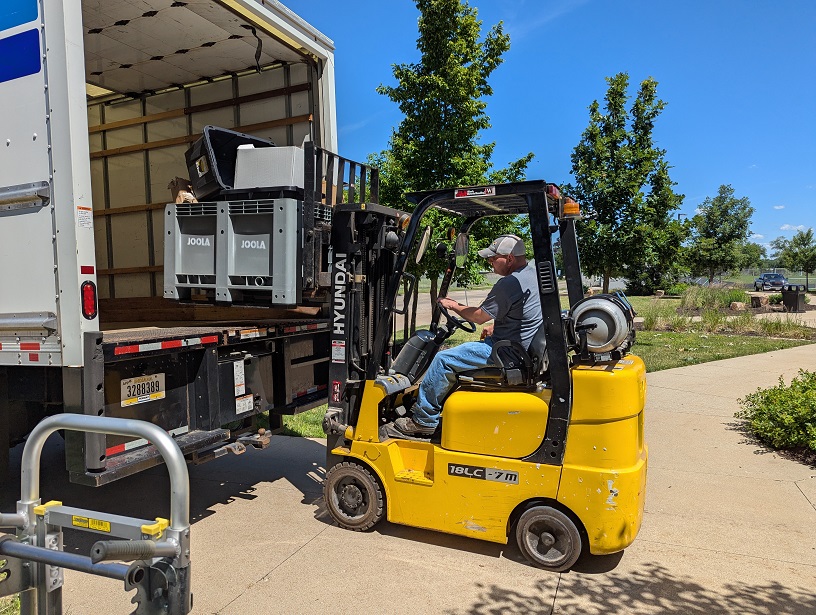
While a phenomenal team—led by Matthew Bosen and assisted by Celestino Ruffing, Terri White, Danielle Marx, Vlad Farcas, and Finley—blitzed through disassembling the barrier frames, I occupied myself with neatly folding the vinyl sheets so all 90 could fit perfectly back into each container for the next tournament.
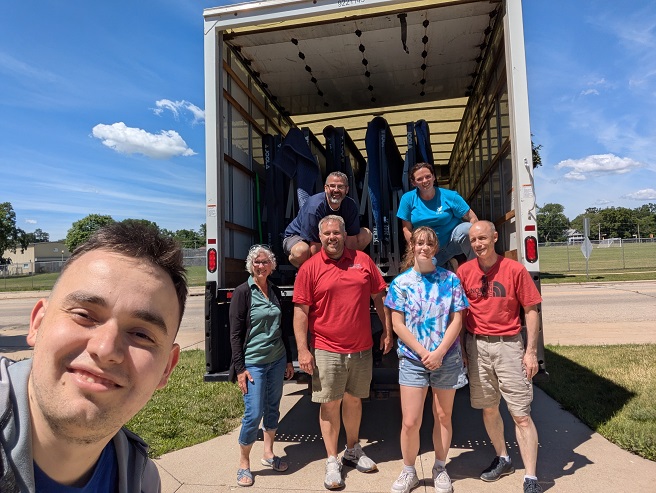
We loaded up all 5 containers and the first 13 tables, and then Vlad and I escaped for a well-deserved lunch.
The Rockford Shuttle
By 1:00 PM, I arrived in Rockford for Leg 1 of the drop-off. Two helpers hired by Ed Hogshead helped me unload. We rolled the 13 tables down the ramp, and then used our by-now-perfected “truck bridge” technique to slide the 5 heavy containers out.
Then, it was right back on the highway to Beloit for round two. We loaded up the remaining 8 tables (the other 3 had actually been sold and picked up by buyers directly at the tournament on Sunday, saving my back from further misery). I drove back to Rockford and unloaded them.
By the time I finished, it was past 4:00 PM. The rental office was technically closed, and I had a brief flash of panic that I’d be stuck with the truck overnight. Fortunately, the rental lot doubled as a local moving business, and a few lingering employees let me hand the keys over to a real human being. I finally walked through my own front door at home around 7:00 PM.
One Last Date with the Database
My body was done, but my tournament director brain wasn’t. I still had about 25 match scores recorded on those emergency paper slips that needed to be logged.
Instead of fighting my restrictive software again, I decided the most efficient path was to just sit down, open the code, and programmatically relax the restrictions that were blocking the draw modifications. Once the code was fixed, I punched in the final scores, generated the official Match Results report, and fired it off to Vlad fore review and he sent it to USATT so they could update everyone’s ratings as quickly as possible. The updated ratings were available around 1 PM on Wednesday.
And with that, the tournament was officially in the books.
The Winners
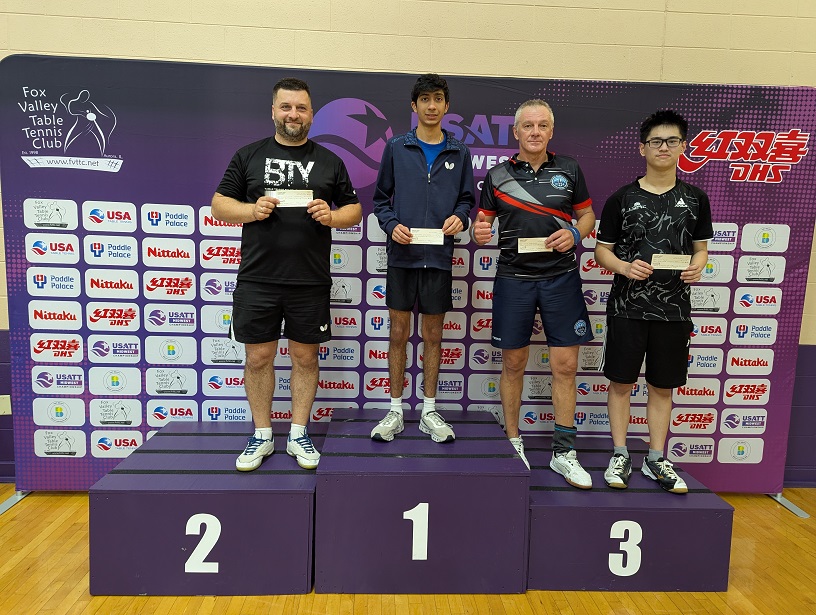
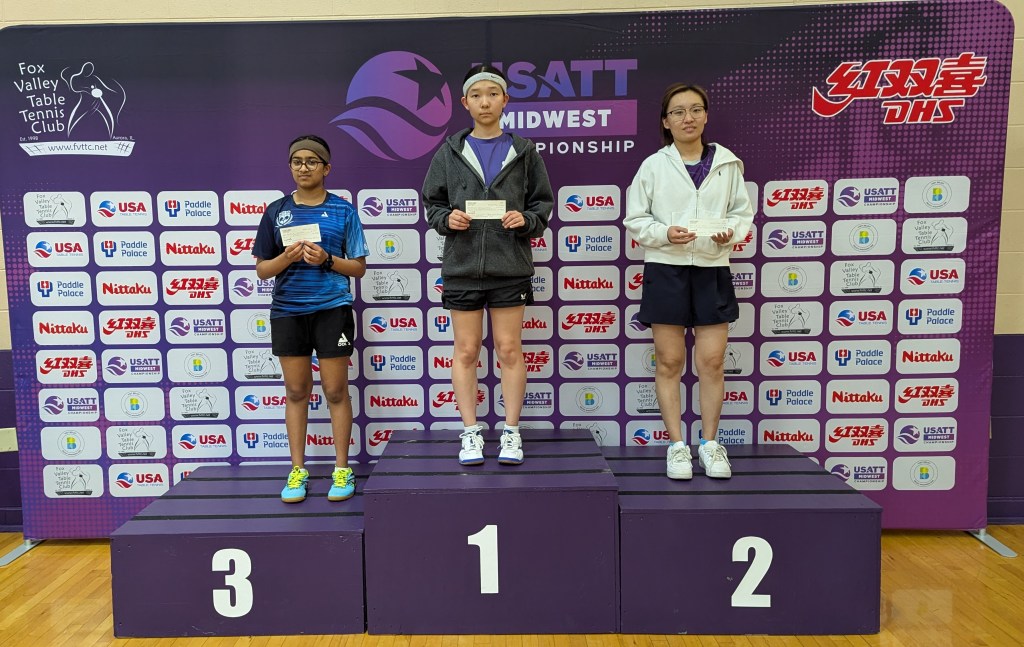
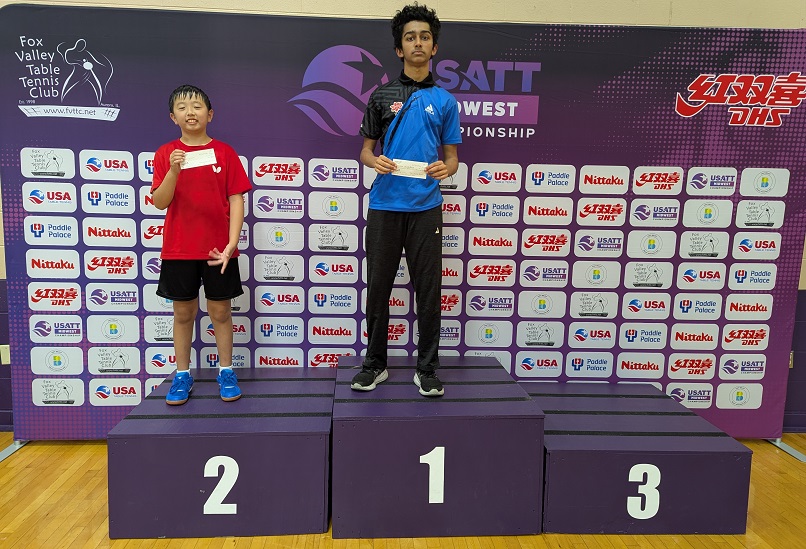
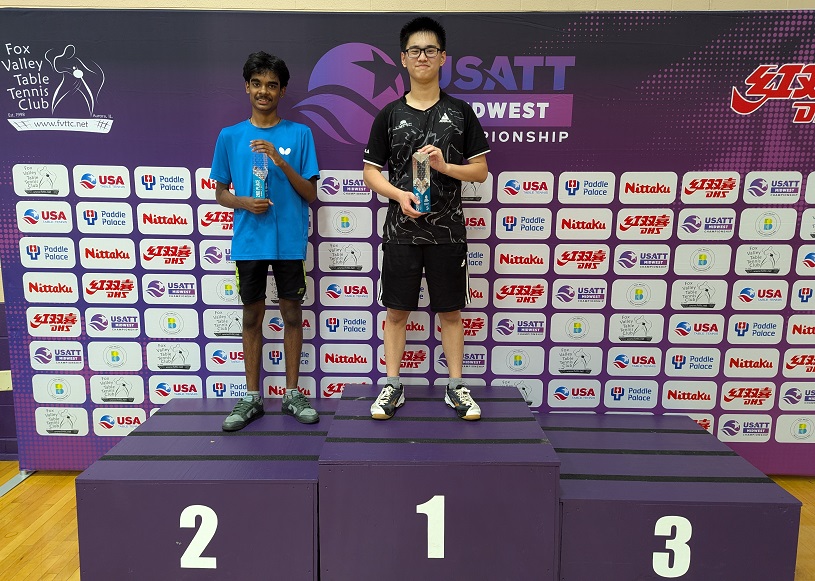
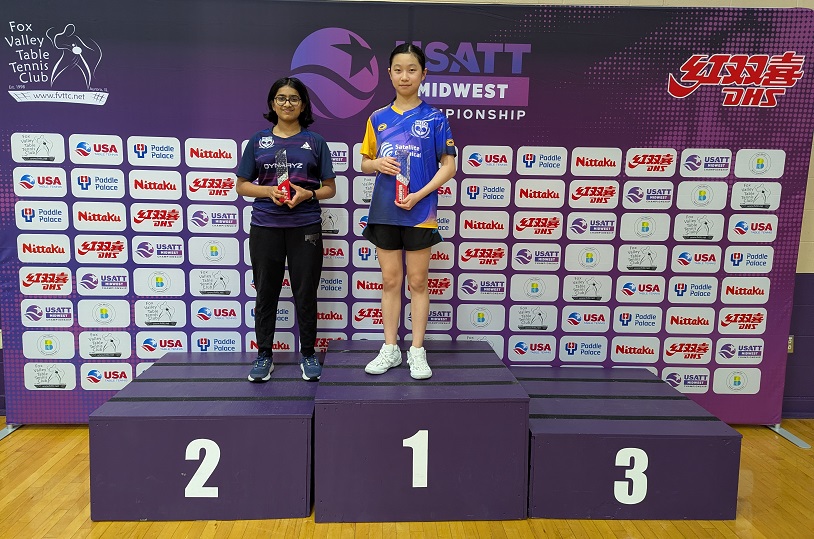
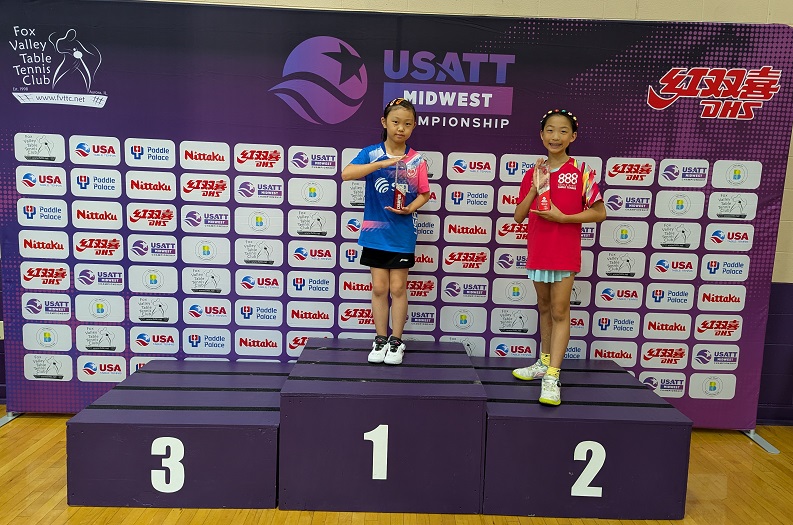
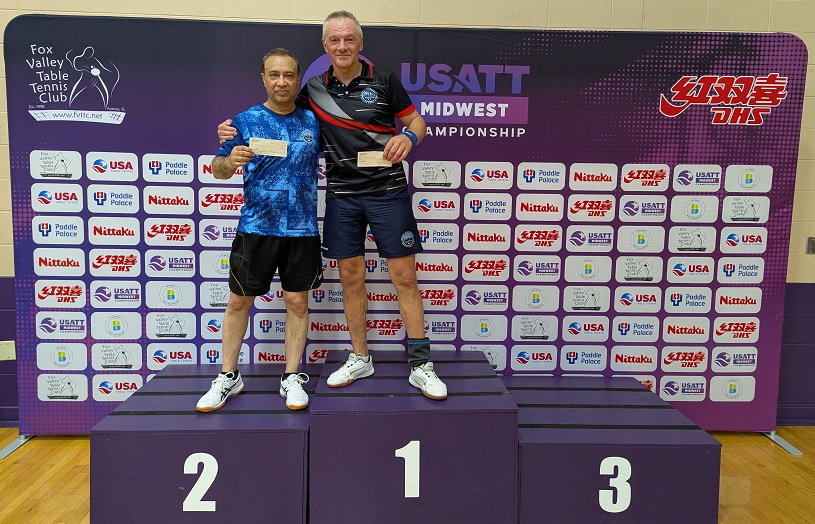
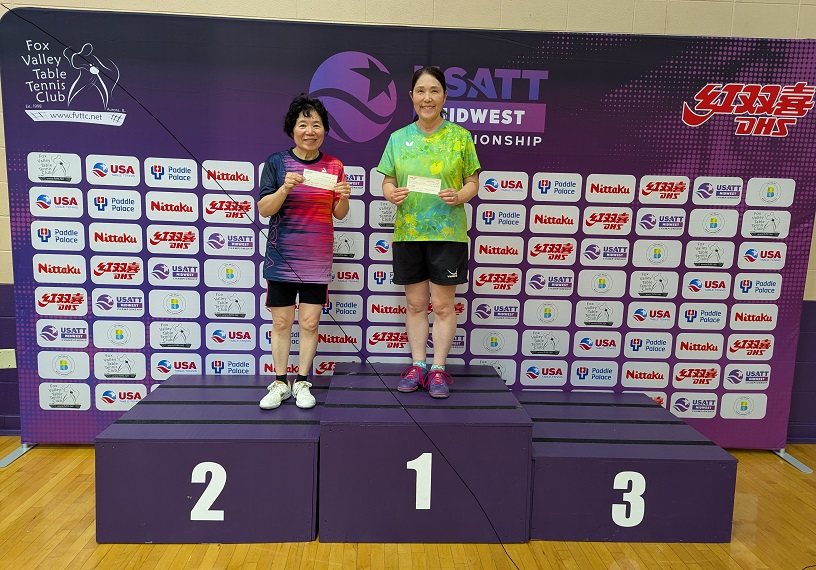
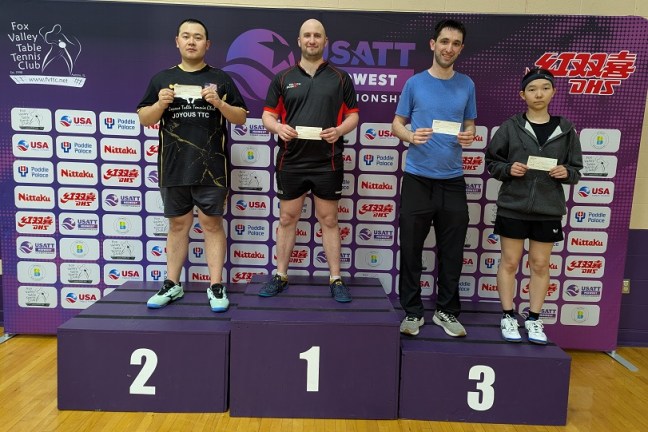
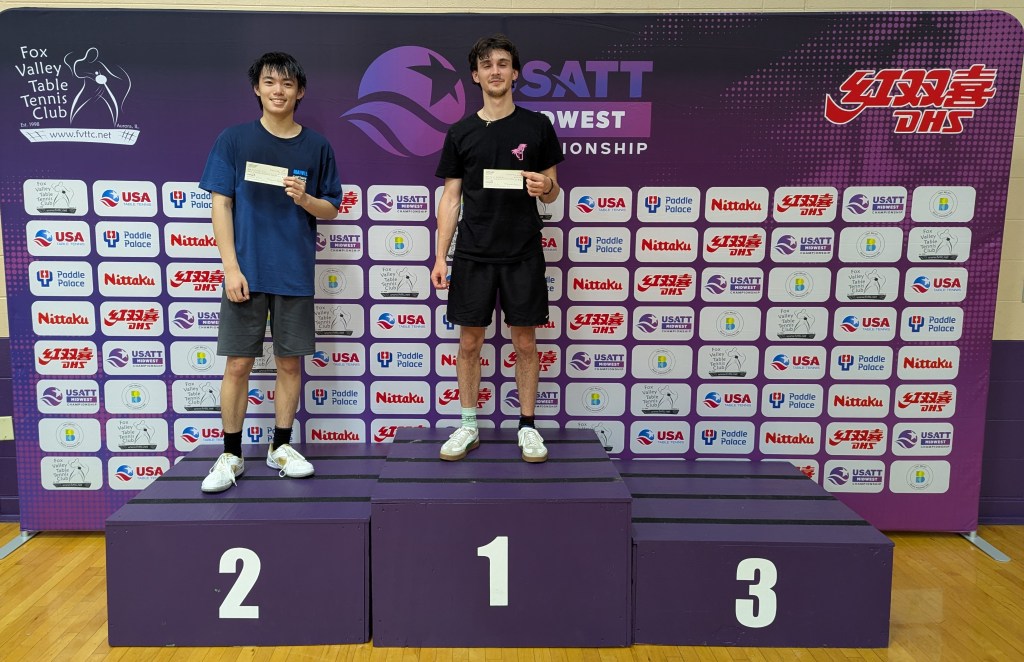
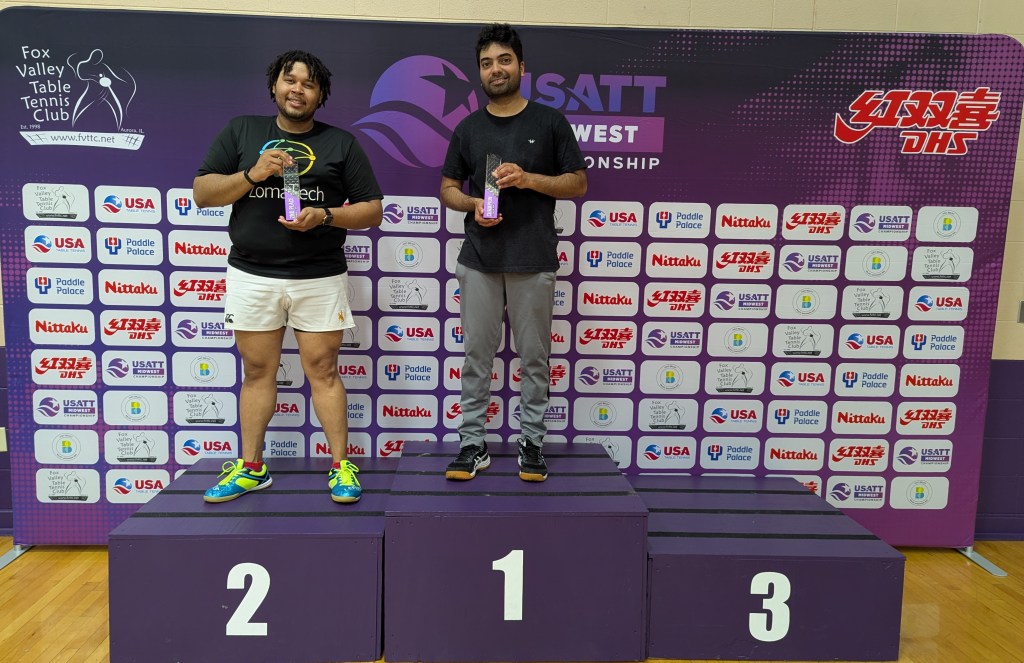
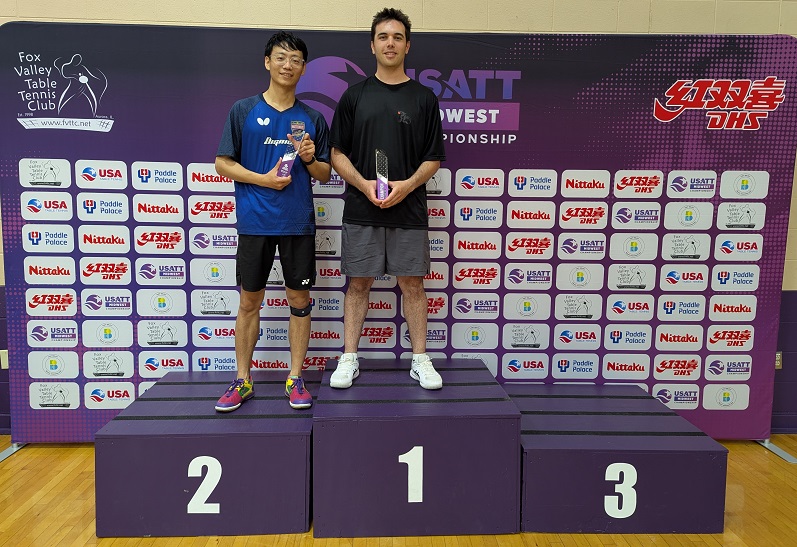
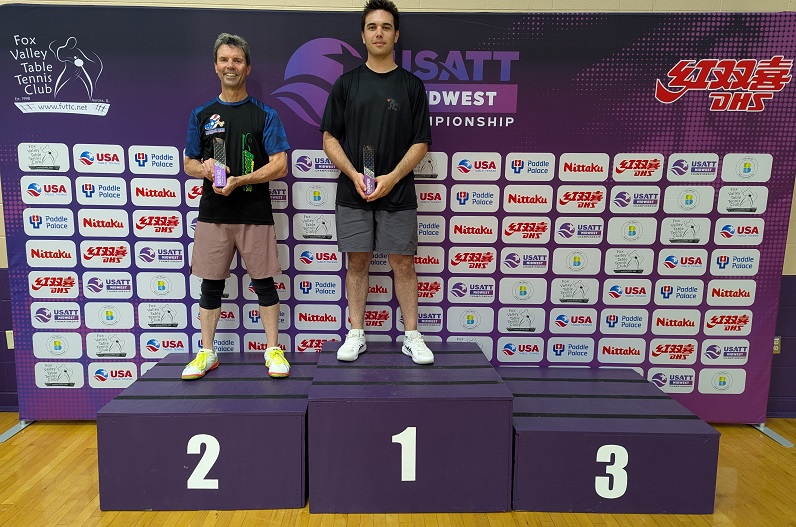
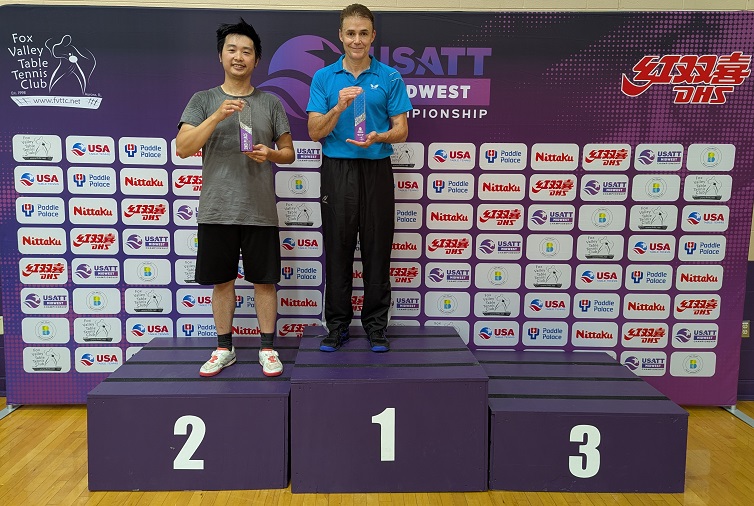
Below you can see the winners of all events in the order of event numbers.